Lesbian Short Film, Love Notes

‘Love Notes’ is my first Lesbian, Gay, Bisexual and Transgender short film, where we follow high schooler, Violet, as she falls in love for the first time with an anonymous peer.

Hi friends! Let’s pretend this isn’t the worst thing i’ve ever made ok ok thank u. This film was made for my IB Personal Project for school! Eek! Yeah yeah yeah. Anyways! I’m very passionate about all the people, no matter their sexuality, race – anything❤️ We are all equally deserving of happiness, love and acceptance. I hope this movie is all about my beliefs that we fall in love with. I hope someone can relate to this movie, or at least brighten up their day. You are not alone. You are loved, and you are valid.

I hope you enjoy!

Happy new year everyone! I appreciate you all 🙂

much love,
– alicia

Date: 2020-01-01 11:30:20
Duration: 00:08:08

Britain Breaks Record in Number of LGBT+ Deputies

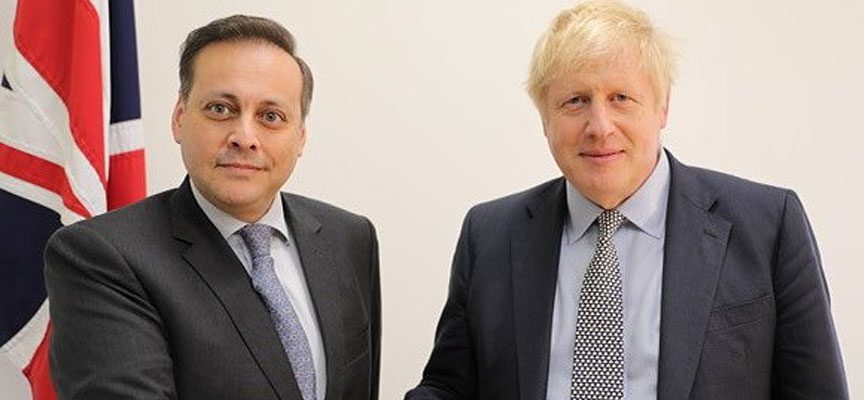
Following the British general election, the number of MPs who declared to be LGBTI + increased to over 50. Among them is the first gay Muslim MP from the Conservative Party, Imrad Ahmad Khan.

According to the news in Yeşilgazete, the number of LGBTI + MPs in the House of Commons has exceeded 50 after the general elections held in Britain last week. Thus, Britain became the country with the most open LGBTI + MPs in its parliament.

The Conservative Party, led by Prime Minister Boris Johnson, who won the election with 368 seats, entered the parliament by declaring that he is currently at least 24 gay or bisexual . The ranking is followed by the Labor Party with 18 deputies. At least 9 MPs from the Scottish National Party declared LGBTI +.

The world’s first open gay Muslim MP

The election of Imrad Ahmad Khan from the Conservative Party to the parliament was welcomed by Muslim gay communities with great joy. Thus, for the first time in the world open gay Muslim MP was elected.

Elliot: We’re not scared, we won’t hide.

On the other hand, the increase in the number of LGBTI + in the parliament can still cause criticism in the society. Conservative Party’s 27-year-old Elliot Colburn, who entered parliament, celebrated the outcome of the election by kissing her boyfriend gathered reaction on social media.

Commenting on the reactions, Colburn said, “I wanted to show that we wouldn’t hide because people were feeling uncomfortable. It helps people to understand that we are like other couples. Kul

The rate of female MPs is 34 percent

The election results were also pleasing in terms of women’s representation. The proportion of women in Westminster has risen by 2 percent to 34 percent compared to last year’s parliament. For the first time, the number of women deputies in the Labor Party has exceeded 50 percent.

Short Movie Against Homophobia

The short film for “Amnesty International” has been linked to by dozens of sites, news portals and blogs. In the online gay world, there have been tens of thousands of visitors among the Turkish Lesbian, Gay, Bisexual, Transgender and Intersex Community, enjoying the most rights in the world.

As at March 2008, the video has been viewed over 73,000 times. “Amnesty International” and the Publicis group also sent an e-mail with the TV spot attached to a database of over 56,000 e-mail addresses, thus setting in motion the whole viral mechanism around the initiative.

A short film for a greater cause.

Award Winning LGBT Short Film, Fifteen

Award Winning Lesbian, Gay, Bisexual, Transgender +  Short Film, Fifteen

Cast & Crew:
Written, Directed, & Edited by AJ Baldwin
Cinematography by Tyler Taliaferro
Starring Anna Lowrimore & Maddie Clarke
Voice Over by AJ Baldwin
Music: https://www.bensound.com

Official Selection: All Genders, Lifestyles, And Identities Film Festival 2018
Recipient: Award of Merit – Southern Shorts Awards 2018
Recipient: Best Drama of the Month – RedWood Film Festival 2018
Official Selection: SXSW Film Festival 2019
Recipient: SXSW Texas High School Shorts Jury Award 2019
Official Selection: Seattle International Film Festival 2019
Recipient: Positive Impact Award – Austin Youth Film Festival 2019

insta & twitter- @ajbldwn

Date: 2018-05-25 13:17:01
Duration: 00:03:28

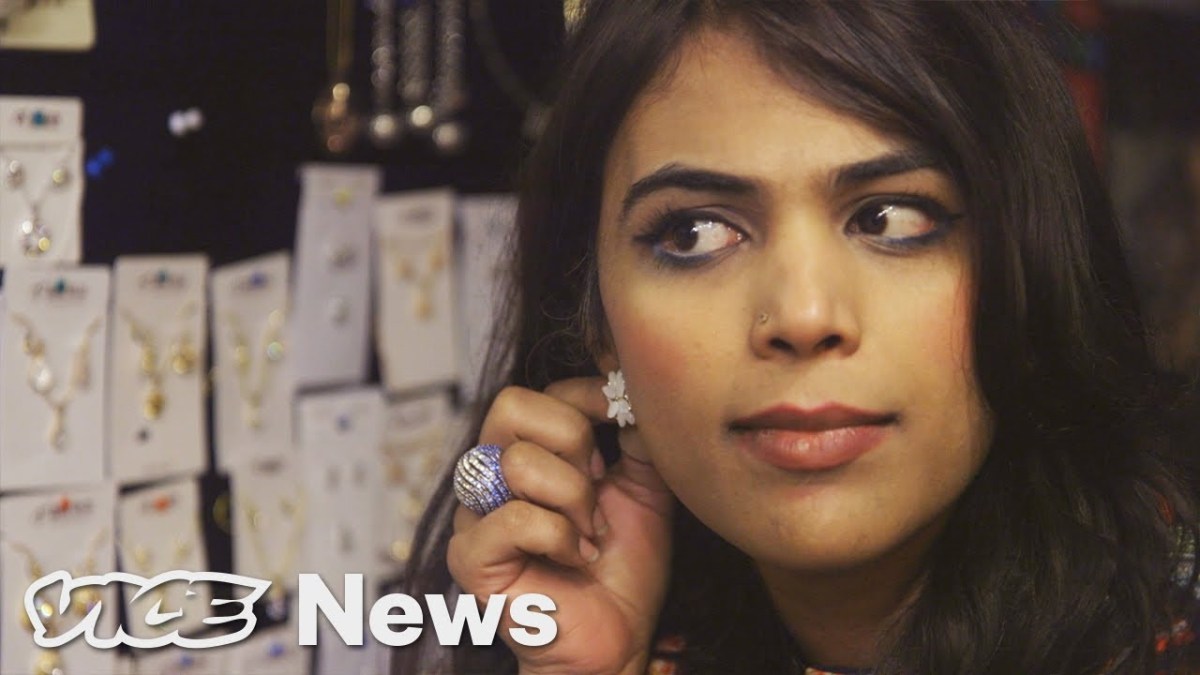
Lesbian, Gay, Bisexual and Transgender in Pakistan

Pakistan is one of the world’s least tolerant countries when it comes to homosexuality. Being gay is illegal in the Islamic republic and carries a sentence of up to 10 years in prison. Gay men are often accused of bringing shame to their families and commonly face violence – sometimes even murder.

Gay-focused apps like Grindr, Scruff, and ManJam.

VICE News went to Pakistan to unravel the country’s underground gay scene and examine the ways that technology is being used to achieve sexual freedom.

Date: 2017-08-07 16:30:00
Duration: 00:16:21

Japanese transgender couple… Japan LGBT community

Japanese transgender couple promise and reality of country’s LGBT community

Step by seemingly immeasurable step, Japan is beginning to acknowledge its country’s sexual minorities, an act at once both radical and surprisingly belated. And no one seems to represent those conflicted cultural strains more emblematically than 26-year-old Kazuki Osawa and his partner Shoi Osawa, a childhood friend. What makes this relationship so different is that Kazuki was born a girl and given the birth name Yumiko Higuchi.

“As a teenager, it gradually dawned on me that I was not normal. And the idea that I would have to live the rest of my life pretending to be the person I’m not, in conformity with others, tore me apart,” said Osawa.

But in a country known for its relative stability, any act of non-conformity is considered subversive. And nothing appears quite as subversive as declaring oneself a member of the LGBT community. So much so that TV shows routinely humiliate the LGBT community by depicting men as swishy eccentrics and lesbians and tool-toting, hyper-aggressive women. It’s a message that goes unchallenged in a nation unaccustomed to challenging well-established societal boundaries. And to drive that point home, the message is pervasive, not only in the lack of any meaningful civil protections for the LGBT community but that fact that bullying and intimidation are understood to be a consequence for going against the grain.

“In Japan, once you’re branded abnormal, it’s almost impossible to start over again,” he said, noting the nation’s conformist culture often makes sexual minorities balk at coming out for fear of discrimination.

But things are changing. According to JapanTimes.co.jp, an increasing number of companies and municipalities are open to greater diversity and [becoming] more tolerant toward members of the lesbian, gay, bisexual and transgender population. Thursday, Shibuya Ward, Tokyo (which has one of the highest concentrations of Japanese LGBT members), unveiled its as yet unapproved proposal to issue certificates declaring relationships of its same-sex couples being “equivalent to marriage,” an unprecedented move that, if realized, is expected to make life significantly easier for LGBT ward residents. (Many believe it will be approved. No vocal opposition has been mounted or is expected.)

But while this may seem like a historic first step, the realities are far less encouraging, the paper notes: “Equality Forum, a Philadelphia-based nongovernmental organization seeking to enhance the civil rights of LGBT ranks, reported in 2012 that a record 484, or 96.8 percent, of the top 500 companies ranked by Fortune magazine included sexual orientation in their employment nondiscrimination policies. In contrast, a 2014 survey on corporate social responsibility conducted by Japanese business magazine Toyo Keizai showed that 114, or just 18.7 out of 607 major listed companies in Japan, make efforts to protect their LGBT employees.”

Meanwhile, Kazuki and Shoi are taking the route many same-sex couples take who cannot have their relationships recognized by the state. They are adopting a child. As a result, they can register with the koseki family registry unit. This allows them to be treated as immediate family if one of them should be hospitalized. (The koseki family registry is required by Japanese law. All households are legally bound to report births, acknowledgements of paternity, adoptions, disruptions of adoptions, deaths, marriages and divorces of Japanese citizens to their local authority.)

“Some people dismiss same-sex marriage as meaningless because we wouldn’t be able to make babies,” Shoi said. “But a lot of opposite-sex couples in Japan opt not to have kids and are still allowed to marry. It’s unfair that we’re not.”

Short URL: http://lgbtweekly.com/?p=56466

Chinese face first ever gay workplace discrimination lawsuit

In what is believed to be the first of its kind, ChinaPost.com.tw is reporting that a man, known pseudonymously as Mu Yi, has filed a 50,000 yuan (US$8,000) gay discrimination lawsuit against a former employer after a video he was in went viral revealing his sexual orientation. “We’re very optimistic,” Liu Xiaohu, a lawyer for the plaintiff, told Agency France Presse (AFP), adding that the case “will definitely have an impact” on views of gay rights in China.

Mu, who is gay, was filmed by police in October arguing with another gay man on a Shenzhen street. The video went viral soon after it was posted online, with some users making their own videos playing on a speech made by the other participant in the dispute, who was wearing a “little red hat.” A week later, Mu was fired from his job as a designer.

Currently, there are no workplace protections for the Chinese LGBT community. Furthermore, despite growing acceptance in the larger metropolitan cities, this still deeply conservative nation frowns upon homosexuality.

For their part, the employer, who was not identified in the report, maintains that Mu’s firing was not linked to his sexual orientation, and says it dismissed him for reasons including his “poor service attitude” and improper attire.

In a study in 2010 by Tom Mountford entitled, “China: The Legal Position and Status of Lesbian, Gay, Bisexual and Transgender People in the People’s Republic of China,” he noted that: “the Chinese government has remained largely silent on the issue of homosexuality. That silence has had two main effects. First, it has stalled any further developments in removing legal discrimination against LGBT people in China. Secondly, it means that the legal status and position of LGBT people is unclear, with varying official treatment across different parts of China.”

The ‘Little Red Hat’ case is expected to be decided in the next three months and could have enormous repercussions.

Design a site like this with WordPress.com
Get started