Transgender people experience higher levels of discrimination but there legal avenues for recourse. Ron Hughes reports.
When Janice [not her real name] went to her insurance company and requested they change her details from a male name to a female name, staff at the insurance company started asking her inappropriate questions about her gender identity, whether she had had “a sex change operation” and other things in front of other customers which made her feel very uncomfortable. When she suggested to the staff they change their procedures to ensure other trans people didn’t go through the same thing, they shrugged it off saying they didn’t get that many requests of this type.
Janice made a complaint to the Human Rights Commission and the insurance company came along to a compulsory conciliation conference where the matter was resolved. The company committed to undertaking a national training program for staff on gender diversity and discrimination, they committed to reviewing their procedure and policies, they formed a partnership with a not-for-profit specialising in trans issues and they made a donation to an NGO nominated by the complainant. They also invited Janice to present to the management team about her experience. It was not a monetary resolution, Janice didn’t get paid compensation, but she did ensure other trans people wouldn’t go through the same indignities.
That was a positive outcome on balance, but for trans people facing discrimination, it’s often very difficult to get a good resolution. Even simple things like getting a driver’s licence to reflect your identified gender is difficult as well as daily things such as being allowed to use the right rest-room.
Sascha Peldova-McClelland of Maurice Blackburn Lawyers explains the difficulties.
“All of those secondary documents such as driver’s licences and Medicare are reliant on either a birth certificate or a passport, so if you can get them using your passport that’s easier, because getting your passport changed into your identified gender is much easier than getting your birth certificate changed,” Peldova-McClelland says.
Under guidelines introduced in 2011, people can choose what gender they want to be listed as on new Australian passports, even if they have not undergone a sex change (as was required in the past). Now all that is needed is a letter of support from a medical practitioner.
“You can get your birth certificate changed but you have to meet some conditions that are quite restrictive: you have to be over 18 or have your parent or guardian agree and you have to have had a sex-reassignment or gender affirmation surgery. And you can’t be married. That’s how it works in NSW,” Peldova-McClelland explains.
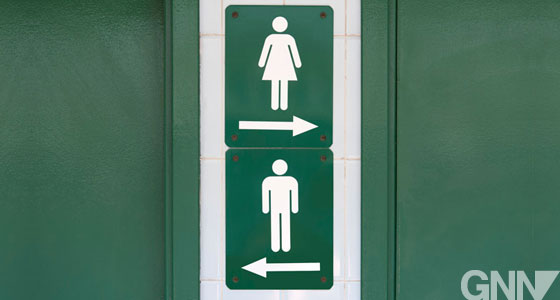
“If you have a birth certificate that reflects your identified gender then you have to be treated as a member of your identified sex and if you’re not that is discrimination. For example, you need to be provided with access to rest rooms of your identified gender. But if you aren’t a “recognised transgender person” under the law, even though you are still protected under some of the anti-discrimination laws, none of those things are a guarantee.
“So you can try to insist that you be allowed, for example, to use bathrooms that accord with your identified gender, but there’s no law that requires employers or anyone else providing facilities to provide that to you. So it’s a bit more of a grey area.”
Discrimination in employment is another frustrating area for trans people.
“The Australian Human Rights Commission publishes reports which consistently show how difficult it is for trans people in employment. From not being recognised in their identified gender to being forced to explain themselves if their identity documents don’t match their identified gender; they’re often denied employment opportunities, denied promotion, or people often find their employment is terminated after it’s revealed that they were born a different sex, or if they announce they are going to transition to a different gender,” Peldova-McClelland says.
What legal resources do trans people have to overcome this discrimination?
“Trans people have recourse to anti-discrimination laws which exist both at a state and a federal level,” Peldova-McClelland explains. “Commonwealth legislation only began to cover gender identity in 2013. That covers things like employment, education, provision of goods and services, accommodation and so on.”
“There’s direct discrimination, for example where somebody might be sacked or bullied or harassed on the basis they are trans, which is unlawful. There’s also indirect discrimination, which is where there’s a requirement or condition which is on its face neutral, but it has the effect of disadvantaging people who are trans. An example: if a company has an HR policy which doesn’t permit changes to an employee’s records, that policy may require a trans person to be constantly disclosing information about their gender identity in order to explain why there’s discrepancies in their personal details,” Peldova-McClelland says.
“You can action that under Commonwealth laws. You can go to the Australian Human Rights Commission and lodge a complaint. The Commission will investigate the complaint and may decide to hold a compulsory conciliation conference where the complainant and for example their employer will attend and try to come to a resolution and if that’s not possible then the complainant has the option to take the matter to the federal court.”
“In case law there’s hardly anything on gender identity discrimination and I think that’s because most of these matters get resolved at the conciliation stage, because it’s so difficult to prosecute them beyond that stage. It’s very expensive, it takes years and discrimination is quite difficult to prove as a technical matter,” Peldova-McClelland says. “A lot of the published decisions you’ll see say ‘No, there was no discrimination’. So it’s quite hard.”
Another murky aspect of the law is that quite often there’s no real legal definition of sex. “You get definitions like, ‘A woman is a person of the female sex’ – totally opaque,” Peldova-McClelland says. “There’s this assumption that sex is this sort of natural, easily discoverable thing that structures society and when you look at it it’s really, really complex. It brings into question a lot of structures in our society. It’s a huge question.”
Getting help
“If you have a complaint under Commonwealth anti-discrimination laws you go to the Human Rights Commission, if you have a complaint under state law you go the anti-discrimination board or tribunal or equal opportunity commission in your state,” Peldova-McClelland says.
Given the laws vary from state to state people can find themselves with different levels of protection and protection for different things in different states. Given there’s not that much case law and laws vary from state to state Peldova-McClelland advises anyone wanting to pursue a complaint to consult with a lawyer experienced in anti-discrimination work as an initial step.
“I know that often involves money which makes it impossible for some people,” she says, “But if there are community legal centres that can help, such as Sydney’s Inner City Legal Centre, which specialises in LGBTI legal issues I’d definitely recommend that. The choice of which jurisdiction to go for is a complex one and it’s not something you’ll be able to get your head around just by reading websites. Have a word with a lawyer first. Anyone practicing in discrimination law should be able to help.”
Sascha Peldova-McClelland is a lawyer specialising in Employment and Industrial Law with Maurice Blackburn Lawyers. Sascha has a particular interest in ending sex and LGBTI discrimination in the workplace. Go to mauriceblackburn.com.au
Gay News Network AU




 Lesbian, Gay, Bisexual, Transgender & Intersex Tv